
I received an email regarding a tithing question. I am always researching the history of subjects and found this to be quite interesting. I will give you two theories of the accounts of historic tithing and let you decide its importance as it relates to tithing.
Question: What particularly, does the Bible educate about tithing because it pertains to current day. My spouse and I’ve longed tithed, and so forth. Regardless of the reply to this query, we is not going to stop tithing.
Answer: I have researched this question and come up with this response, it is a history on the Noachian Family and the Shemites in the bible.
Theory One:
THE NOACHIAN FAMILY. Pg.73
THE SHEMITES.
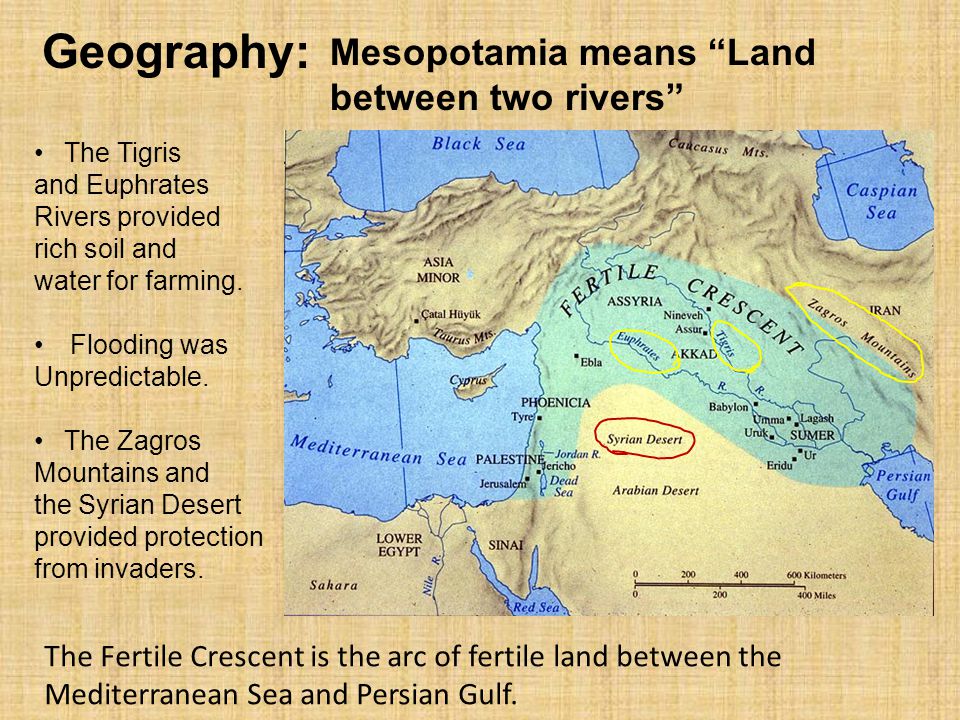
Josephus says: “Shem had five sons who inhabited the land that began at the Euphrates River and reached to the Indian Ocean. Elam left behind him the Elamites, ancestors of the Persians.” It is now universally conceded that Elam, one of the sons of Shem, was the original progenitor of the Persians. They occupied the country southeast of the land of Shinar, or Chaldea, extending down to the Persian Gulf. Asshur, another son of Shem, was the founder of Nineveh, and the father of the Assyrians, one of the oldest nations of antiquity. Assyria was northwest of Chaldea, bounded on the north by Armenia, east by Media and Persia, south by Chaldea and Arabia, and was separated from Syria and Asia Minor on the west by the Euphrates River. Aram, another son of Shem, says Josephus, was the father of the Syrians. These people were located between the Mediterranean Sea on the west, and the Caspian Sea, and headwaters of the Euphrates River on the east, with Palestine, or the old land of Canaan on the south. Their capital was the beautiful city of Damascus, said to be the oldest town on earth, and certainly, the oldest now existing.
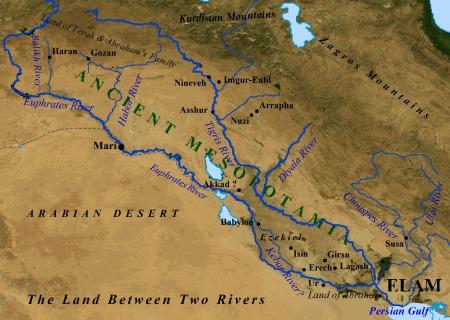
Lud, another son of Shem, was said by Josephus to have been the father of the Lydians. But this, if true, was only partly so, as the Lydians, occupying a portion of Asia Minor, were, in part at least, a Japhetic population. Arphaxad was the oldest son of Shem and had a far more numerous progeny than the others. From him was descended the Chaldeans, Hebrews, Arabs, Ishmaelites, Midianites; Israelites, Edomites, Moabites, Ammonites, Joktanites, and many other tribes occupying the country from the Mediterranean Sea to the Euphrates River, and the valley between it and the Tigris. These were descendants of Shem, the great nations of antiquity which sprang up soon after the flood in western Asia, occupying the country from Ararat to the Indian Ocean, and westwardly to the Mediterranean Sea.
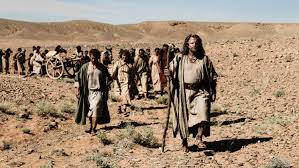
Except for the Jews and Israelites, who have been scattered over the earth under the curse of the Almighty, the main body of the descendants of Shem yet remain in their original habitation, western Asia, and preserve the manners and customs of their ancestors of four thousand years ago. The simple habits, and ranging and tenting life of the Bedouin Arabs of today gives us a very good idea of the state of the same country and customs of the people when Esau, father of the Edomites, with four hundred armed men, met Jacob in the hills east of the Jordan, returning from Padan-Aram with his wives, children, and cattle. And the more settled Arabs living in tents and grazing their cattle, give us a fair picture of Abraham as he dwelt in his tent under the oaks on the plains of Mamre, in southern Palestine, while the Canaanites were yet in the land. Shem was the priest of the Noachian family, and most likely the Melchisedec referred to in the Bible, as the Priest of the Most High, who was the Prince of Salem — present site of Jerusalem, about five hundred years after the flood, and who received tithes from Abraham as he returned from the defeat and slaughter of the kings. The descendants of Shem have ever been the priestly race and the originators of systems of religion. The only three great religions of the earth, which recognize the one true and living God, sprang from the Shemites, viz. : the Mosaic, the Mohammedan, and the Christian.
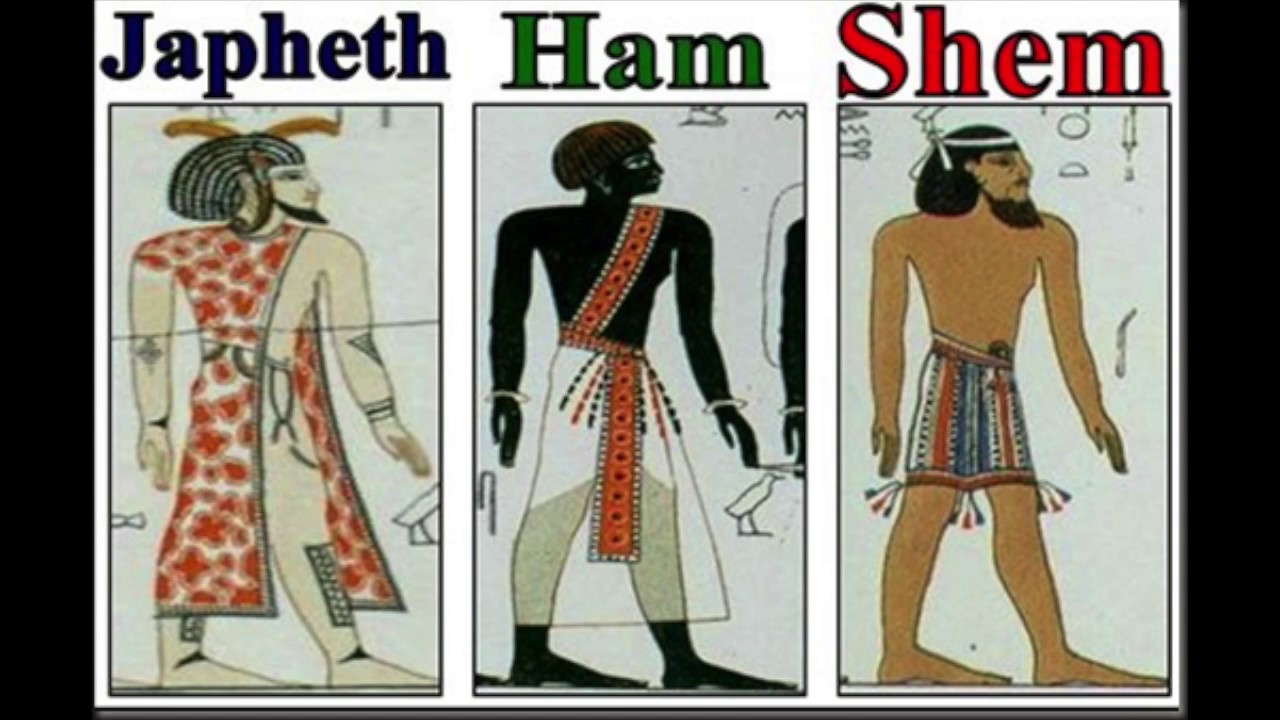
The constitutional traits and peculiarities of these people, physical and mental, well fit them to be the founders of systems of religion and the preservers of the rites and ceremonies pertaining thereto. None of the nations descended from Shem were either migratory or progressive. They were civilized from the start because they had the civilization imparted directly by God through Noah and Shem. None of the descendants of Noah were ever in the savage or barbarous condition which has characterized the inferior types of men in every part of the earth. And the descendants of Shem have remained in the countries allotted to them by the Almighty and preserved their civilization intact. They have neither lost it nor improved it. They have been utterly non-progressive, but all the time civilized, recognizing the existence of one true God and their responsibility to Him. Having no emigrations to engage in; never troubling their minds about science, invention or discovery, and living a primitive, simple, and economical mode of life, they had ample time to devote to their religious rites and ceremonies ; and both their constitutional peculiarities and mode of life will fit them for preserving great systems of religion, in their purity, from generation to generation for thousands of years, like their manners and customs, unchanged. And, as a fact, the Mosaic religion has been preserved and observed almost unchanged for nearly four thousand years by the Israelites or Jews.
Theory Two:
“1According to Roman Canon Law, a Bishop may be consecrated only by three other Bishops, for the episcopate or apostolate was originally collegial rather than hierarchical and admission of a Priest to the episcopal brotherhood (or sisterhood—there is archaeological evidence of women Bishops during the first two Christian centuries) was by consensus. If such a Bishop were to leave the Roman Church, however, he would remain a Bishop forever and could set his own rules for succession. Even during the strong social upheavals of the Reformation and Counter-Reformation, however, very few Bishops defected. The Bishop of Rome eventually became the politically strong head of episcopal synods and was known as the Pope or “Papa.” 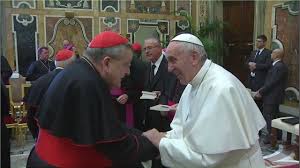 The development of the Papacy is a long and colorful chapter in church history. After the barbarian invaders left a ransacked Rome, Pope Gregory the Great rebuilt the aqueducts and restored the buildings. Although the Byzantine Empire and the Eastern Church with its splendid St. Sophia Cathedral were ascending in power, they were far away, and Rome evangelized Europe. Later the great buildings of the Vatican were erected, and as Europe ascended in power the Church hierarchy became the property of the rich and often unprincipled ruling families descending through Charlemagne and his generals. 2“Red hats” or Cardinals and ArchBishops were appointed to stand between Papacy and local Episcopal diocesan territories, usually for political reward and to increase their share of the tithe. It is fair to say that as the Papacy gained secular power, the clergy became less educated, more crystallized, and more corrupt. Reform in Christianity came mainly through monastic orders like that of St. Francis of Assisi, and then spectacularly with the Protestant Reformation (even though it was as much political as spiritual revolution).”
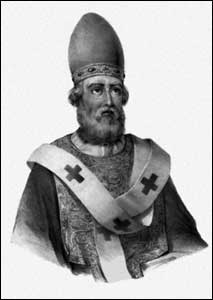
“3The term “Priest” (hieros) was not used in Christian ministry until many centuries had passed, and the smells and bells of the Mass, which is patterned on the animal sacrifice of the Temple that Jesus preached against rather than upon the chaburah or religious brotherhood or Passover meal, had evolved into a complicated liturgy lasting most of the day in the Eastern churches by this time.”
“4It is small wonder that the spiritual power in Christianity left the Priesthood after Constantine took the persecuted sect under protection and made it into state religion through ecumenical councils, an imposed canon of Scripture, and persecution of rival cults. The Spirit drove serious seekers into the deserts of Egypt to follow the Way of St. Anthony. Today we have the Sayings of the Desert Fathers and Mothers, the first Christian hermits (eremite, “desert dweller”) and brotherhoods that would produce the monastic movements. It would be through the monasteries, not Priesthood, that the spiritual potency of Christianity would emerge in Western culture, for the monks were the keepers of the Flame. It would also be through heretical religious family communities that the spiritual power of Protestantism would emerge in Europe.”
“5In Christianity, Priesthood became an imitation of ancient cultural Priesthood. Its ministry was the cure of souls through all the spiritual transitions of life-birth and baptism, confirmation and first communion, marriage and the nuptial Mass, sickness and Unction, death and the funeral Mass. There was much psychological power in the liturgy, icons, symbolic paintings, festival processions, and sacred drama. But Priesthood also exercised extreme psychological tyranny over each soul in its “cure” or care through abuse of the Confessional and a thousand other manipulations of human guilt.”
“6It became part of the unfeeling medieval power structure that resisted the Voice of Spirit in order to maintain monarchy against democracy, the subordination of women over women’s education and rights, and the supremacy of a static theology over the new insights of science. Priesthood never became a light for the future, but always remained a dead hand of the past, as the Master Jesus said, “You have taken away the key of knowledge to those who try to enter the Gate, and you have not entered yourselves!” So we learn most of all about the failure of Priesthood in the medieval Christian Western Church. But what of the Eastern? There the picture is more positive. For one thing, the power of a centralized Metropolitan was considerably less than that of the Papacy. The Orthodox churches were more localized and acted as collegial confederates rather than bureaucrats under a vertical hierarchy centered at Rome.”
Again, I must stress that I am just researching my own theory of this question and in no way acquiesce (agree) or oppose (not agree) to the references. This is just an informal view and research on the question that was posed.
The two theories summarized are interesting for their time period as it relates to how the customs began and streamlined through historical context. The traditions are of different ways in which the priestly fathers handled customs as well as tithing. Some maintained throughout history while others were battered in corruption. This has evolved into today wherein lies low participation in church, temple, mosque, and other cathedral services. There are a lot of people awakening now to the truth of Jesus’ ascension. They are at best aligning and attuning themselves in preparation for their own ascension. We only sincerely hope that these observations help you to come to your own conclusion.
Thank you,
Tammy Dennis El Missouab, BBA, MSLAW, LLM
Works Cited:
1-6Keizer, Lewis & Willa. (1986) Priesthood in the New Age. Santa Cruz, CA pg. 36-38
Dohony, E. L. (1884) Man, His Origin, Nature, and Destiny. Office of the Librarian of Congress, Washington, DC. Pg. 73
Geography map image http://slideplayer.com/slide/4462034/
Shemite, Hamite, and Japheth image https://www.youtube.com/watch?v=k6ZVSqYiFrc
Israelite people http://hashivah.org/why-would-god-kill-moses/
Image of Pope Damascus http://www.reformation.org/pope-constantine.html
Image of Pope Francis https://www.youtube.com/watch?v=-hNNDvAdeTo
 Destiny, The Open Door
Leave a comment